1. Arriving on the North Sea’s Edge
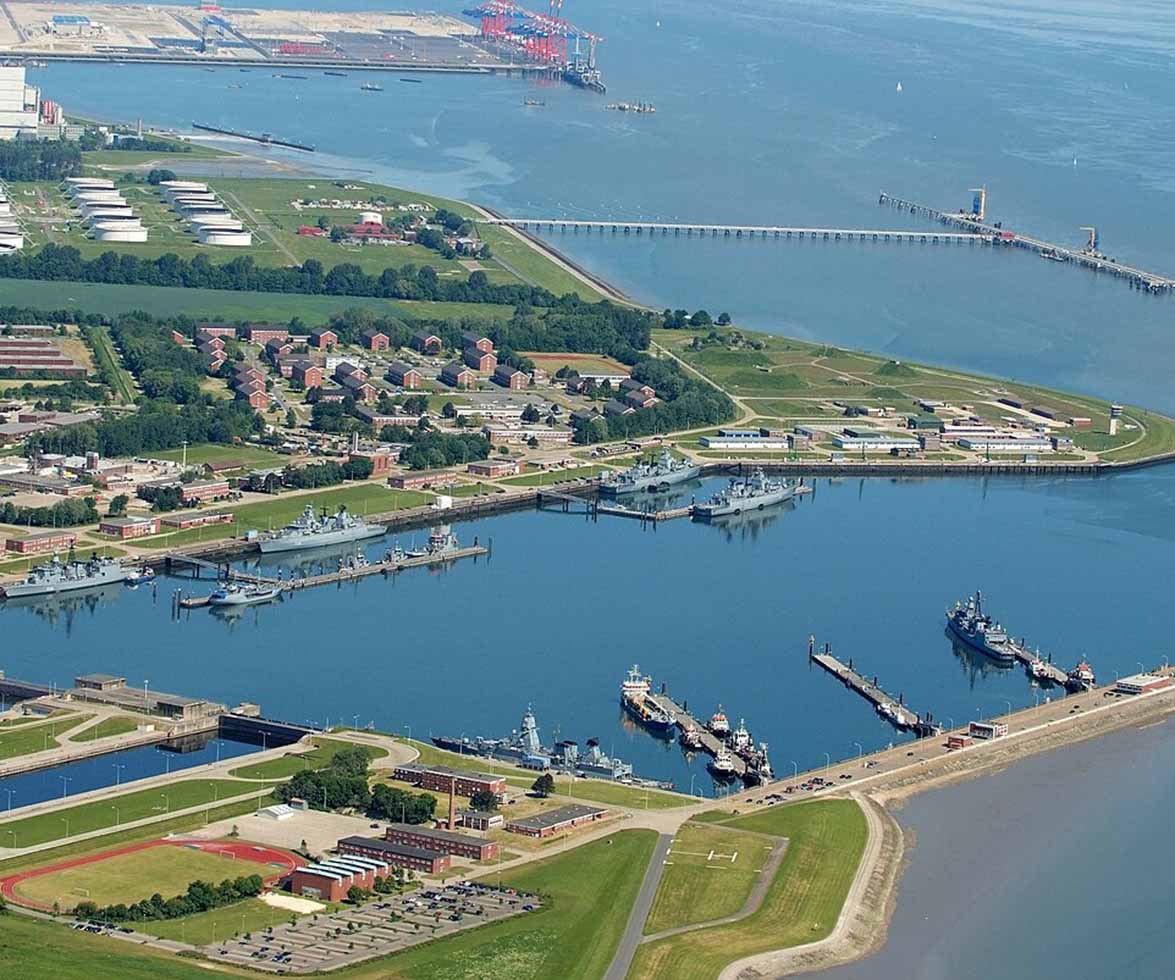
A salty breeze greeted me the moment I stepped off the train at Wilhelmshaven’s modest station. That unmistakable scent of brine, steel, and diesel – the smell of the sea meeting industry – lingered in the air. It wrapped around the town like a misty shawl, comforting in its familiarity to anyone who has ever stood near a working port. There’s an immediate change of pace in a place like this. No frantic tourists with ticking itineraries. No blaring music from beachside bars. Just cranes in the distance, gulls swooping overhead, and the quiet pride of a city that has spent over a century tethered to the sea.
I checked into a small, family-run hotel just a stone’s throw from the harbor. The room had a clear view of the waterline, with ships lounging in the dock like sleeping giants. A pair of binoculars hung by the window – a thoughtful detail – and I made good use of them more than once. There was something meditative about watching the slow choreography of cargo vessels, patrol boats, and fishing trawlers sliding across the gray waters of Jade Bay.
Wilhelmshaven is not a glamorous destination in the traditional sense. It doesn’t try to be. Its allure is rugged and honest, shaped by salt, wind, and history. And what it offers in return to those who come open to discovery is a journey that feels both rooted and revealing.
2. A Walk Along the Bontekai Promenade
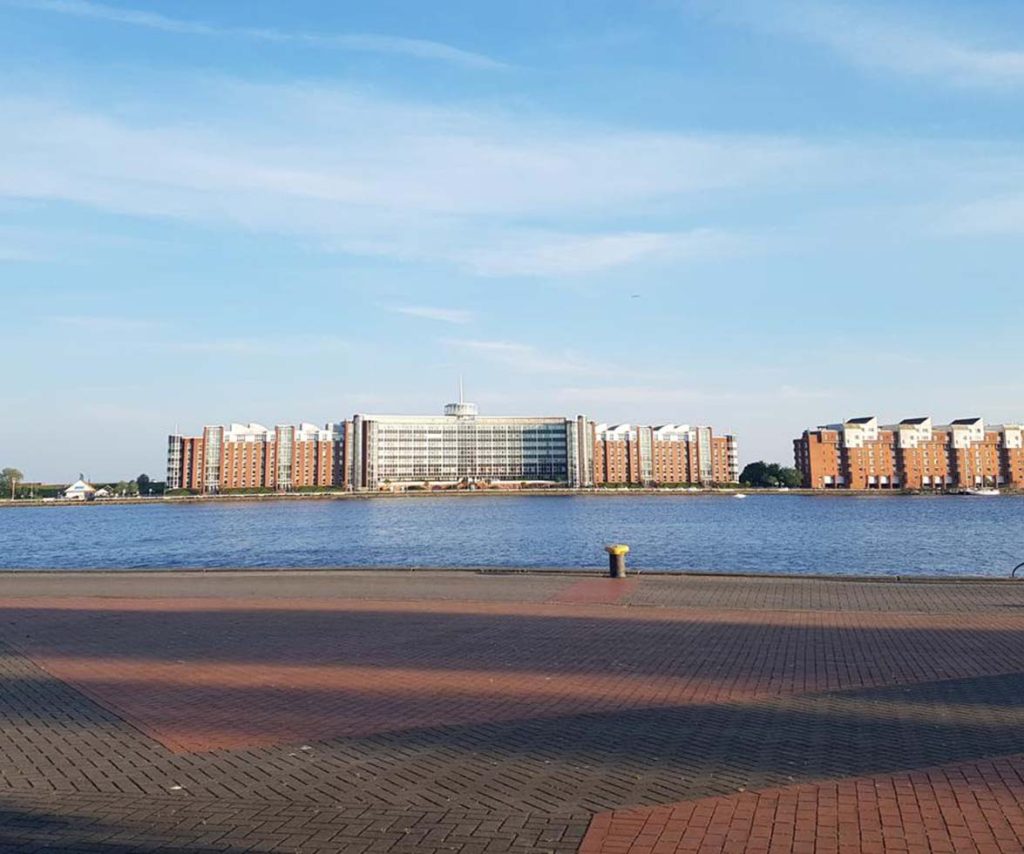
My first morning was quiet. The kind of quiet that seems to stretch time itself. I walked along the Bontekai Promenade, where the canal and harbor meet, lined by anchored vessels and maritime buildings with weather-beaten facades. A decommissioned fireboat painted in faded red. An old navy patrol ship resting stern-first into the quay. The water here never sits still – always shifting, always rippling like a restless dream.
At one point, I passed a couple of local fishermen chatting in hushed tones, hands gesturing with the steady rhythm of men who have spent years balancing stories and nets. They didn’t look up as I passed, but I caught a sliver of their conversation: something about a storm from years back and a buoy that had gone missing. The sea, it seems, remains central in every local tale.
On the opposite side of the harbor, a handful of cranes reached into the sky like metal trees, their long necks dipping toward containers stacked like children’s blocks. It’s not a pretty landscape, perhaps, but there’s an artistry in its functionality. Every piece here has a purpose. And that purpose has been forged over more than 150 years.
3. Tracing the Origins: From Imperial Dream to Naval Stronghold
Wilhelmshaven is not an ancient city. Founded in 1869, its birth was deliberate – orchestrated by King Wilhelm I and Otto von Bismarck to provide the newly unified Germany with a strategic deep-water naval base. While many European cities evolved slowly through layers of conquest and commerce, Wilhelmshaven was conceived with a single mission: to serve the sea and project German power across it.
The city’s military heritage is palpable everywhere. The architecture, while modest, carries the stern lines of 19th-century Prussian planning. Streets are wide, intersections often too expansive for the amount of current traffic – a reminder of their original design to accommodate military logistics. The canal network, the locks, the dry docks – all were built with precision and intent.
Even the language of the locals reflects this history. Words like “Kaiserhafen,” “Marinearsenal,” and “Tirpitz” are not just remnants – they’re living vocabulary, etched into street signs and spoken without irony. It’s as if the city never completely shed its uniform, even in peacetime.
4. Deutsches Marinemuseum: Germany’s Naval Story Unfolded
I made my way toward the Deutsches Marinemuseum late in the afternoon, when the sunlight turned coppery and long shadows slipped across the harbor. Located directly on the waterfront, the museum is impossible to miss – a large, functional building flanked by open-air displays of retired naval hardware. From the outside, it looked less like a museum and more like a command center awaiting activation.
But the moment I stepped inside, everything changed.
The museum’s exhibits are laid out chronologically, beginning with the imperial navy of the late 19th century and moving through two world wars, the Cold War, and into the modern era. The narrative is dense but fluid, guided by timelines and interactive media. Uniforms in display cases stand next to ship models the length of dining tables. Each one tells a different story – of ambition, catastrophe, strategy, and survival.
There’s a haunting quality to some of the exhibits. A rusted torpedo casing from a U-boat mission gone wrong. Personal letters from sailors stationed on the Bismarck. A bell recovered from the wreckage of the SMS Seydlitz. These are not just artifacts – they are echoes. They hold the weight of lives lived at the edge of war and water.
Outside, the real show waits.
Moored along the pier is the destroyer Mölders (D186) – a massive Bundesmarine warship commissioned in 1969 and decommissioned in 2003. It’s open to the public, and walking its decks was unlike anything I’d done before. You don’t just look at history here – you stand in it. You feel the pitch of the deck under your feet. You hear the wind whistle through the radar masts. You duck through narrow metal hatches and climb steep stairwells.
Below deck, the sleeping quarters are tiny, with bunks stacked three high. The engine room smells faintly of oil, even after all these years. The command bridge still carries the aura of responsibility, as though someone might walk in any minute and begin issuing orders.
I spent over two hours aboard the Mölders and could have stayed longer. The ship doesn’t just preserve history – it embodies it.
5. Küstenmuseum Wilhelmshaven: The Human Side of the Sea
A short walk from the naval museum lies another treasure – the Küstenmuseum, or Coastal Museum. While smaller and more modest in presentation, its charm lies in its focus on the local – on how the sea shaped not just empires, but ordinary lives.
Inside, the museum walks you through the evolution of coastal life, from early Frisian settlements to modern port logistics. There are exhibits on fishing traditions, storm surges, shipbuilding crafts, and even the ever-changing line of the coast itself. The North Sea is not a gentle neighbor – it gives and it takes. The stories here reflect that duality.
I was particularly taken with the section dedicated to coastal defense. There were scale models of bunkers, complete with camouflage patterns, as well as artifacts from the Atlantic Wall. Helmets, periscopes, even ration kits – all displayed without grandeur, only purpose. There was also a remarkably detailed simulation of how a storm surge affects the region’s dikes and floodplains. It made clear how deeply connected the people here are to both the gifts and the threats of the water.
6. Wilhelmshaven’s Hidden Corners and Quiet Legends
One evening, I wandered further west, past the iconic Kaiser Wilhelm Bridge – a striking blue swing bridge completed in 1907. As it lifted to let a tanker through, I stood with a few others on the railing, watching the slow rise of steel and counterweight. The bridge, though no longer the tallest or most advanced, holds its dignity like a retired admiral in full dress uniform.
Beyond the bridge, the neighborhoods grow quieter. Old warehouses have been converted into artist studios and cafes. A woman was painting seagulls on the side of a former customs building, each one captured mid-flight, as though frozen in a sky only she could see.
I came across a small memorial tucked beside the canal – a plaque dedicated to sailors lost during a wartime convoy in 1943. No fanfare, no marble, just bronze words and a rusting anchor resting beneath a pine tree. These moments often leave the deepest impressions. The past isn’t just in museums here – it’s in the cobblestones, the graffiti, the silences.
7. Schillig and the Open Horizon
One afternoon, I decided to take a detour northeast to Schillig – a coastal village near the edge of the Wadden Sea National Park. The bus ride was peaceful, and when I arrived, I was struck by how open the horizon felt. Fields stretched out like patchwork quilts, dotted with sheep and the occasional lighthouse. Then came the mudflats – the famous Wattenmeer, a UNESCO World Heritage site.
I walked across the sand during low tide, the ground beneath me slick and firm. Birds swooped low, skimming the surface for morsels hidden in the silt. In the distance, the silhouettes of oil platforms stood like forgotten sentinels. The sea was far out, but I could still hear it – a low murmur, as if whispering its intent to return.
Schillig reminded me of something Wilhelmshaven’s core also suggests – that here, the sea is not a backdrop. It is the main character.
8. Reflections on a Living Port
Every city is built on some foundation. Stone, wood, sand, or steel. But Wilhelmshaven is built on intention – a clear, deliberate choice to confront the sea, to master it, to serve it. It has lived through empires, wars, economic shifts, and changing tides. And yet it endures, quietly, almost defiantly.
The museums here are not about glorifying war or maritime conquest. They are about bearing witness – to innovation, struggle, resilience, and memory. They show how deeply a place can be shaped by water, and how those who live beside it learn to read its moods like scripture.
On my last evening, I returned to the harbor promenade, a warm drink in hand, and watched the lights on the ships flicker on, one by one. The cranes stood still, silhouetted against the last glow of daylight. Somewhere a horn sounded, low and long. A departure. Or perhaps an arrival. Either way, the rhythm continued.
And in Wilhelmshaven, that rhythm – of sea, history, and humanity – never truly stops.