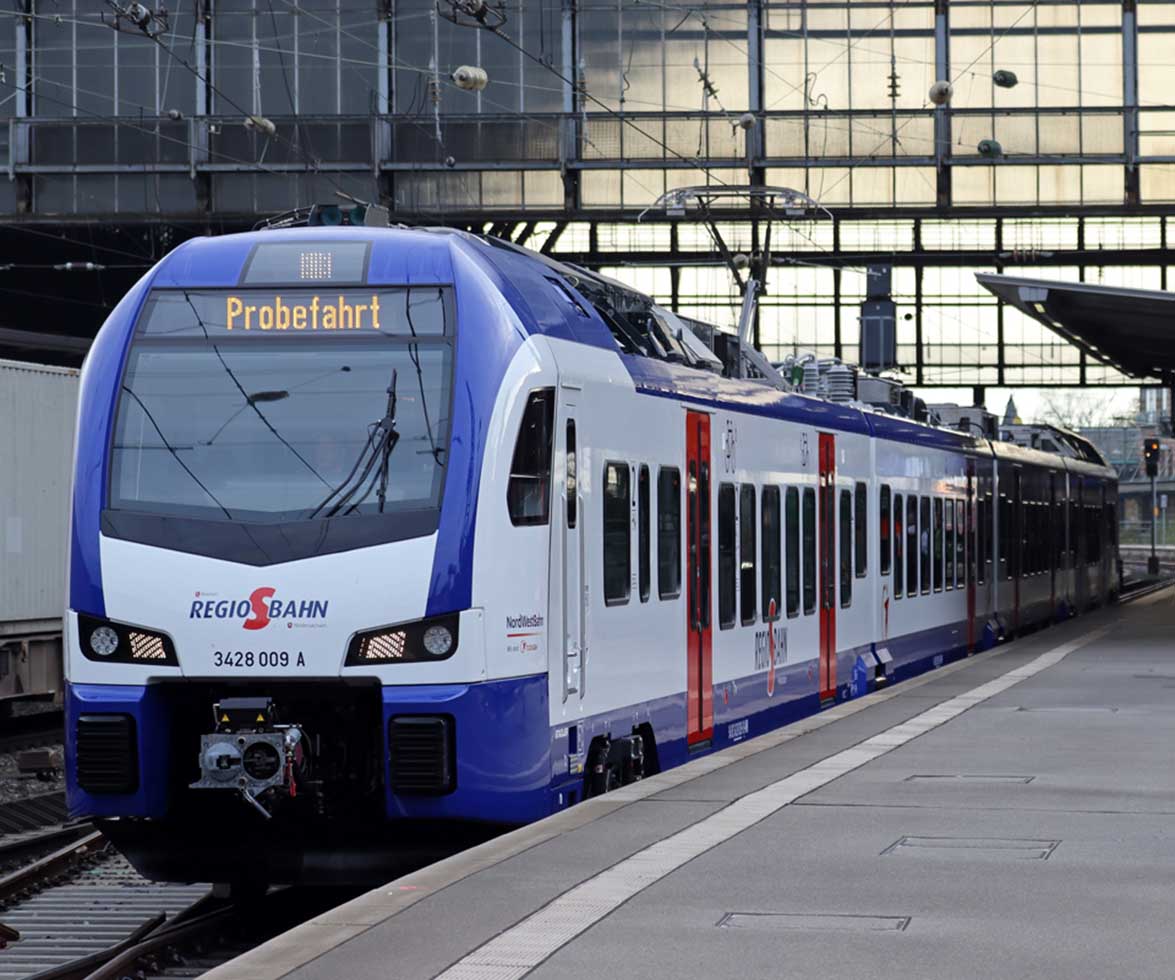
Northern Germany has a certain stillness to it, a kind of quiet charm that doesn’t shout for attention—but rather, rewards those who take the time to explore it fully. One such route that captures this charm is the journey from Bremerhaven to Wilhelmshaven, two harbor cities along the North Sea, both rich in maritime history, wind-lashed by sea breezes, and quietly radiant with an unshakable sense of place.
The question arises: How best to travel between these two coastal cities? For those planning a journey in this region, comfort, convenience, and time-efficiency are all paramount. This route may not appear on the flashy lists of global adventures, but it offers its own kind of magic—especially when navigated with ease and insight.
Let’s chart the most efficient and enriching ways to get from Bremerhaven to Wilhelmshaven, examining each possibility with care. Each method is considered for practicality, duration, ease of access, and the occasional anecdote from the road (or rail, or sea).
1. Understanding the Geography of the North Sea Coast
Before diving into the logistics, one must first understand the spatial relationship between the two cities. Bremerhaven and Wilhelmshaven are separated by the Jade Bight, a bay of the North Sea. On a map, they seem close—perhaps even deceptively so. In reality, however, traveling between them directly is not as straightforward as one might hope.
The absence of a bridge or direct ferry across the Jade Bight means that land transport must take a looping path inland before approaching the destination from a different angle. What could be a 30-minute hop across the water becomes a 2–3 hour journey by road or rail.
2. Option 1: By Train — The Practical Choice
For travelers in Germany, the Deutsche Bahn (DB) railway network is often the first consideration. And rightly so. It’s reliable, generally punctual (though Germans love to debate this), and offers extensive coverage even to smaller towns and coastal areas.
The Route
From Bremerhaven, a typical train journey to Wilhelmshaven requires at least one transfer, usually at Oldenburg or Bremen. There is no direct rail line between Bremerhaven and Wilhelmshaven, which may seem surprising given the proximity and similar maritime orientation of both cities.
A typical journey proceeds as follows:
- Bremerhaven Hbf → Bremen Hbf (Approx. 35–45 minutes)
- Bremen Hbf → Wilhelmshaven Hbf (Approx. 1 hour 20 minutes)
Depending on the time of day and train availability, the connection at Oldenburg may be substituted for the Bremen route.
Comfort and Convenience
Regional trains in this part of Germany tend to be well-maintained, with clean interiors and adequate seating. While high-speed trains like the ICE and IC are absent on this route, the RE (Regional Express) and RB (Regional Bahn) lines do a commendable job. Luggage storage can be tight during rush hours, but for most travelers, the experience is seamless.
Ticketing and Cost
Tickets are available via the Deutsche Bahn app, at station kiosks, or online. One useful option is the Niedersachsen-Ticket, a regional day pass that covers unlimited travel on regional trains throughout Lower Saxony for one day. It’s economical for solo travelers and particularly advantageous for groups.
Pros:
- Environmentally friendly
- Predictable and scheduled
- Reasonably comfortable
- No need for driving
Cons:
- No direct connection
- Travel time extends to 2–2.5 hours with transfers
- Occasional delays on regional lines
3. Option 2: By Car — The Flexible Approach

When autonomy and flexibility top the list of priorities, driving is the method that consistently delivers. The road distance between Bremerhaven and Wilhelmshaven is approximately 130 kilometers, depending on the chosen route, and typically takes 1.5 to 2 hours.
The Route
The most straightforward route is as follows:
- Bremerhaven → A27 → A29 → Wilhelmshaven
This involves taking the A27 highway south toward Bremen, and then switching onto the A29 near Oldenburg, which leads north directly into Wilhelmshaven. Road conditions are generally excellent, with well-marked signs and ample rest stops.
Roadside Discoveries
The drive, while not dramatic in scenery, does offer its own pleasures. Neat rows of wind turbines dot the horizon, and the flat, open landscapes of Lower Saxony unfold in long, peaceful stretches. Occasional villages with brick-built houses and tidy flower boxes add a touch of postcard charm.
For those inclined, a stopover in Oldenburg is worthwhile. The city boasts a vibrant pedestrian zone, historical architecture, and a relaxed café culture.
Fuel and Costs
Fuel costs in Germany are not modest, and travelers should budget accordingly. Renting a car is straightforward with agencies in Bremerhaven, and options range from compact city cars to more spacious touring models. GPS is essential, and most rentals include it or offer it as an add-on.
Pros:
- Direct and faster than rail
- Complete control over schedule
- Possibility of spontaneous stops
Cons:
- Fuel and rental expenses
- Parking in Wilhelmshaven can be tight
- Navigation in unfamiliar areas may stress some drivers
4. Option 3: By Bicycle — For the Adventurous and Energetic
For those with stamina and a passion for the open road, the cycling route between Bremerhaven and Wilhelmshaven is not only feasible but surprisingly rewarding. The distance is approximately 90–100 kilometers, depending on the path taken.
Planning the Route
There is no single official cycle route directly connecting the two cities. However, a combination of rural cycle paths, coastal dike roads, and shared secondary roads offers a quiet and scenic experience. The journey often includes parts of the Weser-Radweg and Jade Bay cycling trails.
Duration and Practicalities
A reasonably fit cyclist can complete the trip in one full day—about 6 to 8 hours of riding, excluding breaks. Given the unpredictable coastal winds, weather plays a significant role. A tailwind can make the ride joyous; a headwind, considerably less so.
Cycling in Germany is supported by excellent infrastructure. There are dedicated bike paths, frequent signage, and even small bike-friendly inns and cafes along the way.
Pros:
- Immersive, intimate connection with the landscape
- Eco-conscious and healthy
- Rich in unexpected discoveries
Cons:
- Physically demanding
- Requires good weather
- Not suitable for everyone
5. Option 4: Ferry (or Not) — A Myth Debunked
At first glance, a ferry from Bremerhaven to Wilhelmshaven sounds not only plausible but ideal. Two port cities, both positioned on a bay—surely a boat would offer a direct and charming passage.
Alas, no such public ferry service exists between the two cities. Commercial shipping dominates the Jade and Weser estuaries, and while local ferries serve short crossings near Bremerhaven, none extend to Wilhelmshaven. Private charters or harbor cruises exist, but they are designed for leisure, not transit.
This is one of the more curious oversights in regional infrastructure. The idea of sailing from one maritime city to another is romantic, but the logistics simply don’t support it for regular travelers.
6. Option 5: Bus Services — An Underrated Alternative
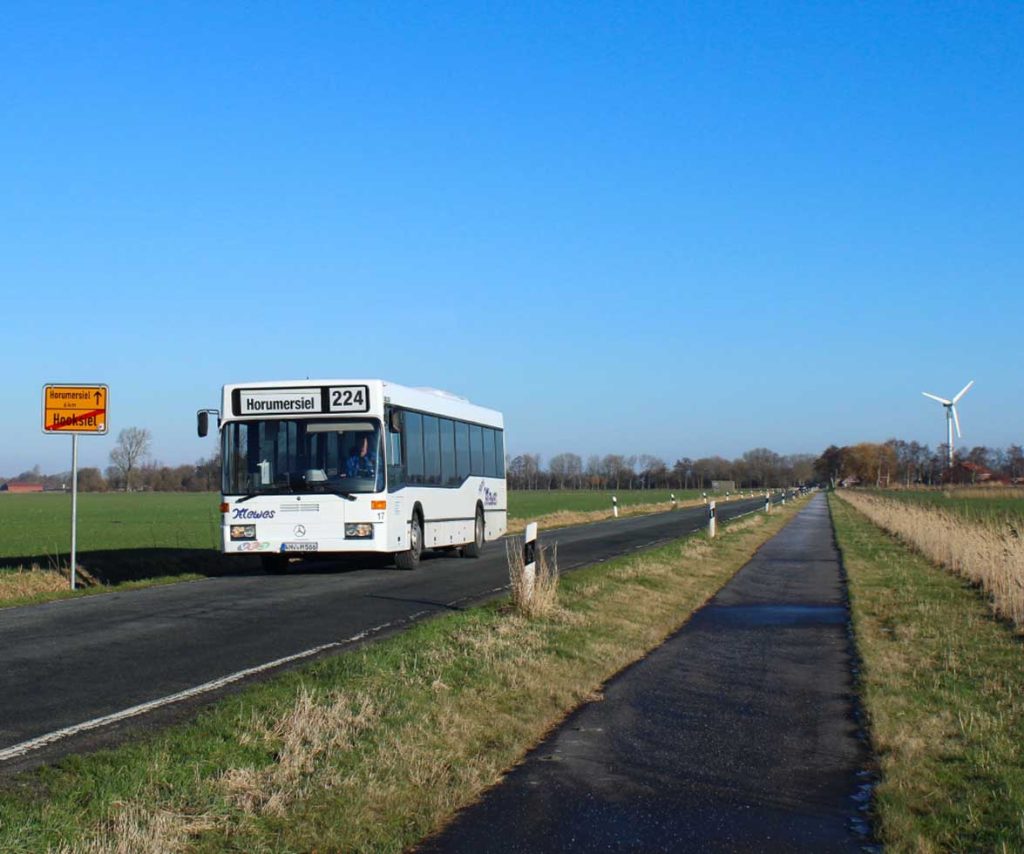
Though not as celebrated as trains, regional buses in Lower Saxony provide an often-overlooked but efficient travel option. Services vary based on the day and season, and they are more frequent during weekdays.
Typical Route
There is no direct long-distance coach between Bremerhaven and Wilhelmshaven, but regional buses can fill in the gaps where train service falters. A possible itinerary includes:
- Bus from Bremerhaven to Oldenburg
- Bus or train from Oldenburg to Wilhelmshaven
This hybrid approach can offer cost savings, though it may sacrifice speed and comfort.
Ticketing and Schedule
Bus tickets are available at regional transportation websites or local ticket offices. It’s wise to check the schedule in advance, as weekend services may be sparse or operate on limited hours.
Pros:
- Budget-friendly
- Often reaches small towns not served by trains
- Quiet and uncrowded
Cons:
- Slower than other modes
- Indirect routes
- Limited luggage space
7. Cultural Reflections Along the Way
Traveling from Bremerhaven to Wilhelmshaven is more than a change of location; it’s a gradual passage through subtle cultural and geographical shifts. Bremerhaven, historically linked to emigration and global shipping, carries a sense of international openness, with its German Emigration Center and bustling container port.
Wilhelmshaven, by contrast, feels more reserved—home to the German Navy and a quieter civic rhythm. Its promenade, the Südstrand, offers North Sea views with a serenity that rewards the patient traveler.
Both cities reflect the soul of Lower Saxony, shaped by water and wind, history and heritage. The journey between them serves not only as a transit of space, but of experience.
8. Conclusion Avoided
The journey from Bremerhaven to Wilhelmshaven offers multiple paths, each with its own flavor. Railways offer structure, the road offers independence, cycling offers immersion, and even the apparent absence of a ferry teaches something about regional development.
The North Sea coast, with its peculiar rhythm and understated beauty, reveals itself differently depending on how one chooses to move through it. Whether seated on a train watching the landscape roll by, driving past wind farms on the autobahn, or pedaling down a dike with gulls circling overhead, the traveler finds that the journey becomes part of the destination—quietly, convincingly, enduringly.