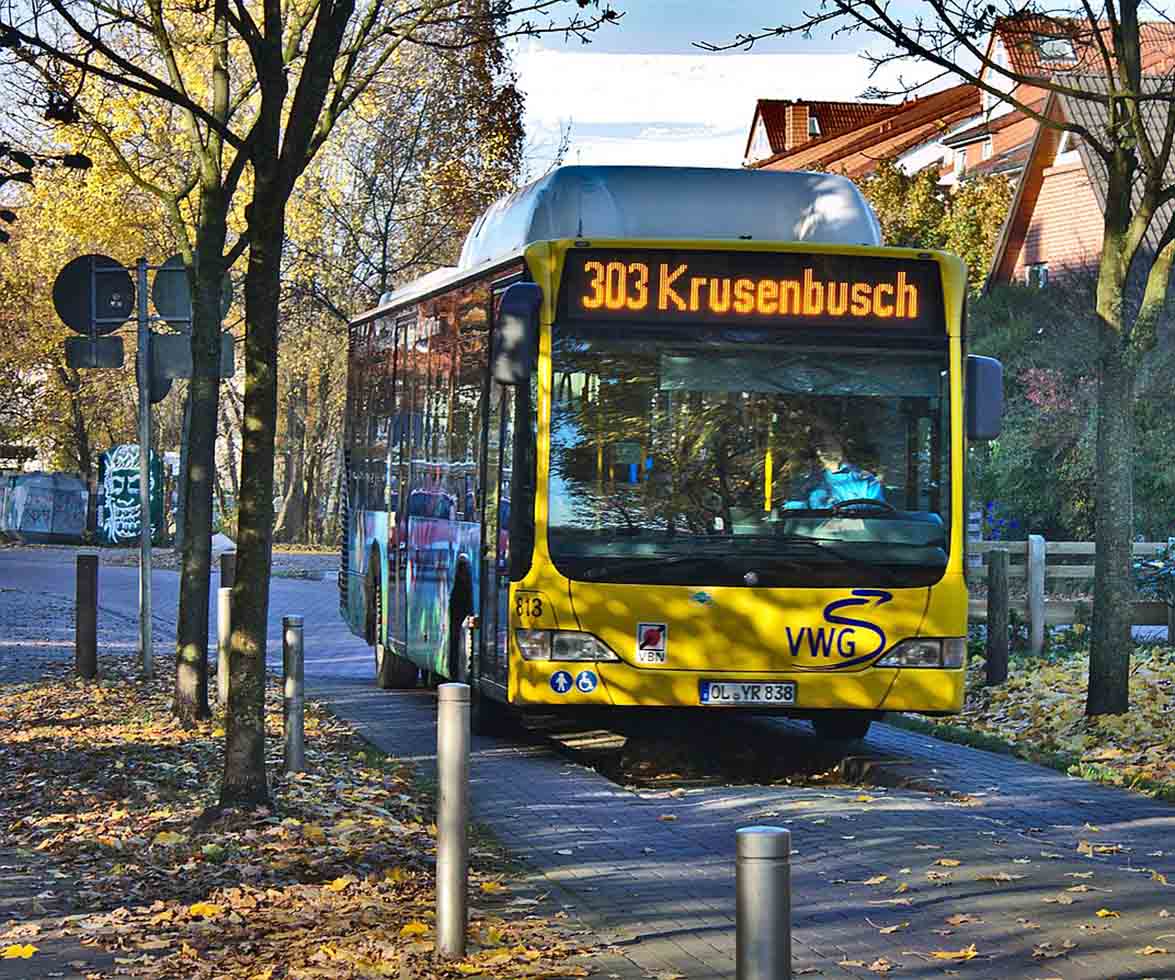
When I first stepped off the train at Oldenburg Hauptbahnhof, the air felt different—calmer, quieter, and somehow more deliberate. Nestled in the northwest of Germany, Oldenburg isn’t the loud, sprawling metropolis that demands your attention with grand landmarks or roaring traffic. Its charm lies in the details, and nothing illustrates that better than its public transport system.
I arrived in Oldenburg on a brisk Wednesday morning, somewhere around 9:30 a.m. The regional train from Bremen had taken just under half an hour, and as I rolled my suitcase down the platform, I was already thinking about how to navigate the city. I wasn’t planning to rent a car. I wanted to explore Oldenburg in the way locals do—by bus, bike, and on foot.
1. Orientation at the Hauptbahnhof
Oldenburg’s main train station is functional rather than flashy. There are two main exits: one leading toward the city center (Innenstadt) and the other opening up to the suburban sprawl. Near the primary exit, there’s a compact but well-maintained ZOB—Zentraler Omnibusbahnhof, or central bus station.
The first thing I noticed was the clear signage. Bus stops are labeled with big yellow circles bearing green “H” letters. Next to each stop is a digital screen that shows real-time bus arrival information. I stood in front of the electronic board, noting that Bus 306 was due in five minutes. I had no idea where Bus 306 went, but I appreciated how clear and legible everything was.
Next to the stops, there was a ticket machine. That was my first real task—figuring out how to buy a ticket.
2. Buying Tickets: Methods and Options
Ticket Machines
The ticket machines in Oldenburg are intuitive, especially if you’ve used any sort of European transit system before. There’s an option to change the language to English, Dutch, or Turkish. I tapped through to find the single-ride fare—“Einzelfahrschein”—which cost me €2.80. It was valid for a one-way trip across the city.
I noticed several types of tickets:
- Einzelfahrt (Single Ride): Valid for one journey on buses within the city limits.
- Tageskarte (Day Pass): Unlimited travel on buses for one day. At €6.90, this paid off quickly if you take more than two buses.
- Gruppenkarte (Group Pass): For up to five people traveling together. It’s an economical option for families or small groups.
- Wochenkarte / Monatskarte (Weekly/Monthly Pass): Mostly useful for commuters or anyone staying longer than a week.
Bus App
Later, I downloaded the “VBN” app (Verkehrsverbund Bremen/Niedersachsen). It’s the official app covering Oldenburg and surrounding areas. With it, I could plan trips, view live updates, and buy tickets with a debit card or PayPal. What I liked most was the ticket archive—it kept track of every ticket I bought, so I didn’t need to worry about losing paper receipts.
On the Bus
Buses in Oldenburg also allow onboard ticket purchases, but only with coins and small bills. I learned this the hard way when I tried to pay with a €50 note. The driver shook his head politely but firmly. Luckily, I’d already downloaded the app and had a digital ticket ready to go.
3. Understanding the Timetable System
Every bus stop in Oldenburg features a schedule—usually posted in a glass case next to the pole. These are updated seasonally, and I discovered that Oldenburg operates on a split timetable system:
- Montag–Freitag (Monday to Friday): Full schedule, high-frequency.
- Samstag (Saturday): Slightly reduced service.
- Sonn- und Feiertag (Sunday and Holidays): Significantly fewer buses.
Each entry on the timetable includes the hour and minute the bus departs. For example, “13 | 05, 25, 45” means buses leave at 1:05, 1:25, and 1:45 p.m. I started to recognize patterns. Bus 309, which runs from ZOB to the Wechloy area, typically departs every 20 minutes during peak times and every 30 minutes off-peak.
Real-time updates are surprisingly accurate. I waited for Bus 310 one afternoon at the Universität stop. The app said it was delayed by 3 minutes. Right on cue, it showed up 3 minutes late.
4. Bus Routes: A Neighborhood-by-Neighborhood Overview
Innenstadt (City Center)
Almost every bus route in Oldenburg passes through or starts at the ZOB. From there, it’s easy to reach pedestrian shopping areas, museums, and cafes. I took Bus 301 to Schlossplatz, where the old ducal palace now houses a museum.
Eversten
Bus 306 connects the ZOB with Eversten. The neighborhood felt residential and laid-back, with tree-lined streets and small bakeries. I got off at the Theodor-Pekol-Straße stop and followed the signs to a nearby park.
Kreyenbrück
Bus 315 took me to Kreyenbrück, a southern district known for the Klinikum Oldenburg hospital. This area felt more suburban. I noticed a higher frequency of riders in work uniforms, suggesting many were commuting to and from the hospital complex.
Donnerschwee and Bürgerfelde
Bus 308 is a direct route to Donnerschwee, a district that’s slowly becoming hipper. There’s street art, some coworking cafes, and independent shops. I spent an hour walking between stops, just to take in the atmosphere. Bürgerfelde is more family-oriented, and Bus 313 served it well.
Wechloy and the University District
Bus 309 was indispensable for getting to the Carl von Ossietzky University. Students piled in during the morning hours, most with semester tickets. I visited the library and then walked over to the large shopping mall nearby. Bus 310 took me back to the ZOB afterward.
5. Maps and Navigation Tools
Paper Maps
At the Hauptbahnhof and various major stops, there were free transit maps. I picked one up from the tourist information center across from the station. The map showed all major bus routes, color-coded and numbered, with special highlights for evening and weekend services.
The map was detailed enough to plan daily excursions. I folded it up and kept it in my jacket pocket, using it frequently when my phone ran low on battery.
Digital Tools
The VBN app and Google Maps both provided reliable route planning. I’d enter my destination, and the apps would suggest multiple connections, walking times, and transfer points. I found that Google was sometimes off by a minute or two, especially for buses not operated by VWG (Verkehr und Wasser GmbH), the main bus company in Oldenburg.
6. Evening and Night Services
After dark, the tempo of the city changes, and so does the bus service. Regular lines taper off around 8 or 9 p.m., though some continue hourly until midnight. I went to a jazz concert one evening at the Kulturetage and caught Bus 302 afterward. It ran less frequently, and I had to wait 18 minutes, but it came.
There are also “Nachtbusse” (night buses) that operate on weekends. These are designed to bring people home safely after a night out. They cost the same as regular buses and usually start after midnight. I rode one on Saturday from the city center to the northern suburb of Ohmstede. Despite the late hour, it felt safe and clean.
7. Accessibility and Comfort
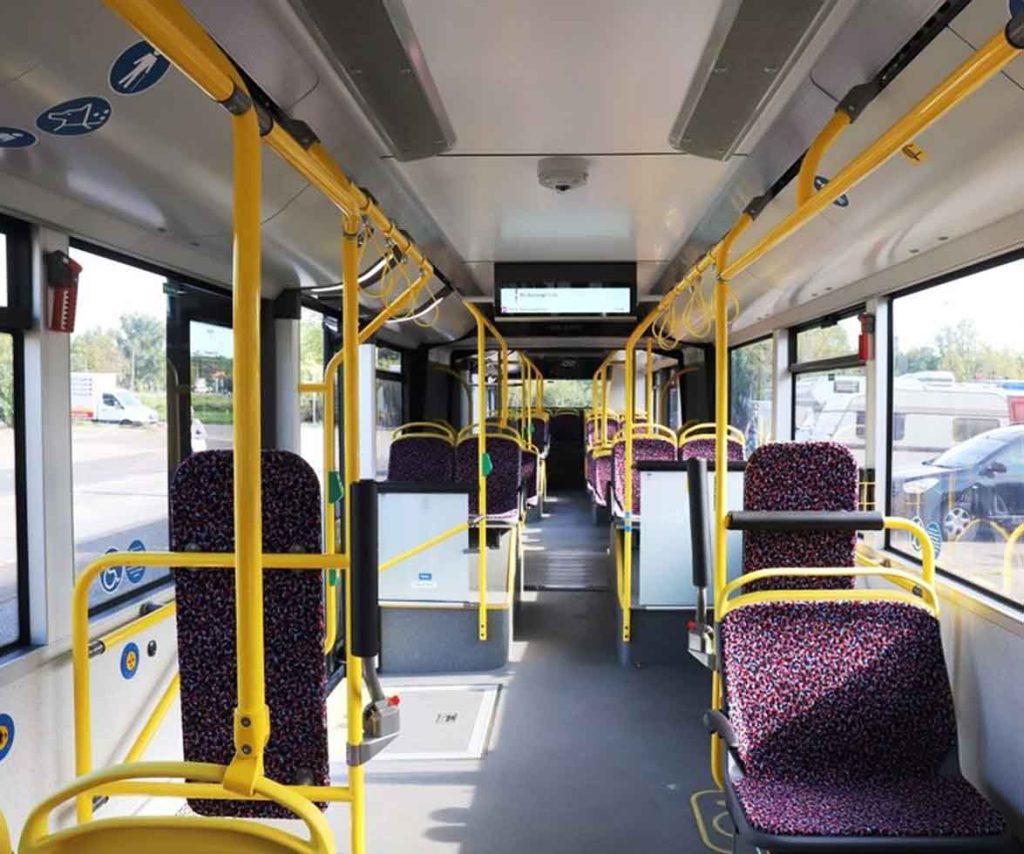
Oldenburg buses are modern, low-floor, and fully accessible. There’s always a ramp for wheelchairs and strollers, and a dedicated space in the middle of the bus. Every vehicle I rode was clean—impressively so. Seats are comfortable, and even during busy hours, the atmosphere remained courteous.
Electronic displays announce upcoming stops, and there’s a pleasant chime before each name is announced. That made it easy to track my location without needing to stare at my phone constantly.
8. Bikes and Buses: Combining Modes
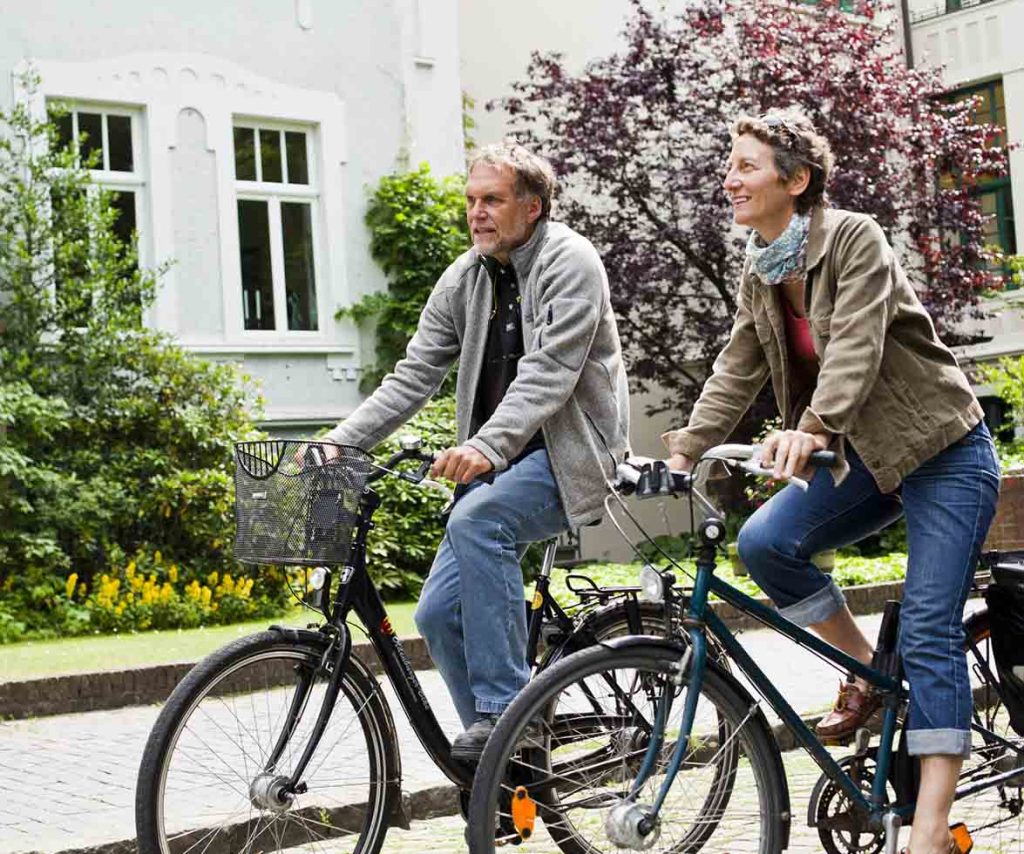
Oldenburg is a cycling city. I rented a bike on my second day and discovered how seamlessly bike paths are integrated with the bus network. Many stops have bike racks, and some buses are equipped with external racks for bicycles—particularly those traveling longer distances or to nature areas outside the city.
There’s also the “Park + Ride” option, where you can leave a bike at a transit station and continue by bus. It’s common to cycle to ZOB, park, and then take a bus across town. This hybrid travel style seemed second nature to the locals.
9. Exploring Beyond City Limits
VBN tickets also allow travel into neighboring towns and cities. I took a weekend trip to Bad Zwischenahn, about 25 minutes west of Oldenburg. With a Tageskarte Regio, I could ride the regional train out and take buses around the lake. The same ticket worked for my return trip.
The same applies to excursions into Bremen, Delmenhorst, or Westerstede. Zones matter here—tickets are priced by how many zones you cross. The VBN website has a zone calculator, which I used before heading out.
10. What I Learned from Riding with Locals
There’s a rhythm to public transport in Oldenburg that’s less hurried than in major cities. People make eye contact when they board. They say “Moin” (a northern German greeting) to the driver. They give up their seats to elderly passengers. That sense of civility carried through every ride.
Most passengers seemed to know their routes by heart. Schoolchildren in uniform boarded in groups, tapping their semester passes. Elderly women in floral jackets rode to the Wochenmarkt (weekly market). Students debated politics in soft voices on their way to campus. Every ride offered a little vignette of daily life in Oldenburg.
11. Final Reflections from the Bus Window
There were times I simply stayed on the bus, letting it loop through unfamiliar neighborhoods, just to see where it would go. Each corner of Oldenburg felt like its own small village. Riding the bus gave me access not just to locations, but to the personality of the city.
The buses are more than transport here. They are connectors, threads that stitch together old villas, modern apartments, university halls, and weekend lakeside escapes. Every ride was a glimpse into the city’s quiet efficiency, its attention to detail, and its understated charm.
Exploring Oldenburg through its buses didn’t just get me from place to place. It helped me understand how the city breathes.