The moment the train pulled into Oldenburg, I noticed something different in the air. A stillness, perhaps, or maybe a slower rhythm than the bustling cities I’d just left behind. The station was modest, the kind that doesn’t try to impress but welcomes you quietly. With my bag over my shoulder and the cobblestone streets calling, I stepped into a city that would soon feel like it had been waiting patiently for my visit.
1. A Quiet Arrival and First Impressions
It was a grey afternoon, not quite raining but humid enough to carry the scent of earth and old stone. I wandered down the streets near the Schlossplatz, where trees line the avenue and bicycles outnumber cars. There was something comforting about the rows of tidy brick facades, the ivy creeping up old walls, and the occasional splash of late-spring blooms from well-tended windowsills. This wasn’t a city trying to sell itself to tourists. It was a city quietly living its life—elegant, reserved, yet with an undercurrent of pride.
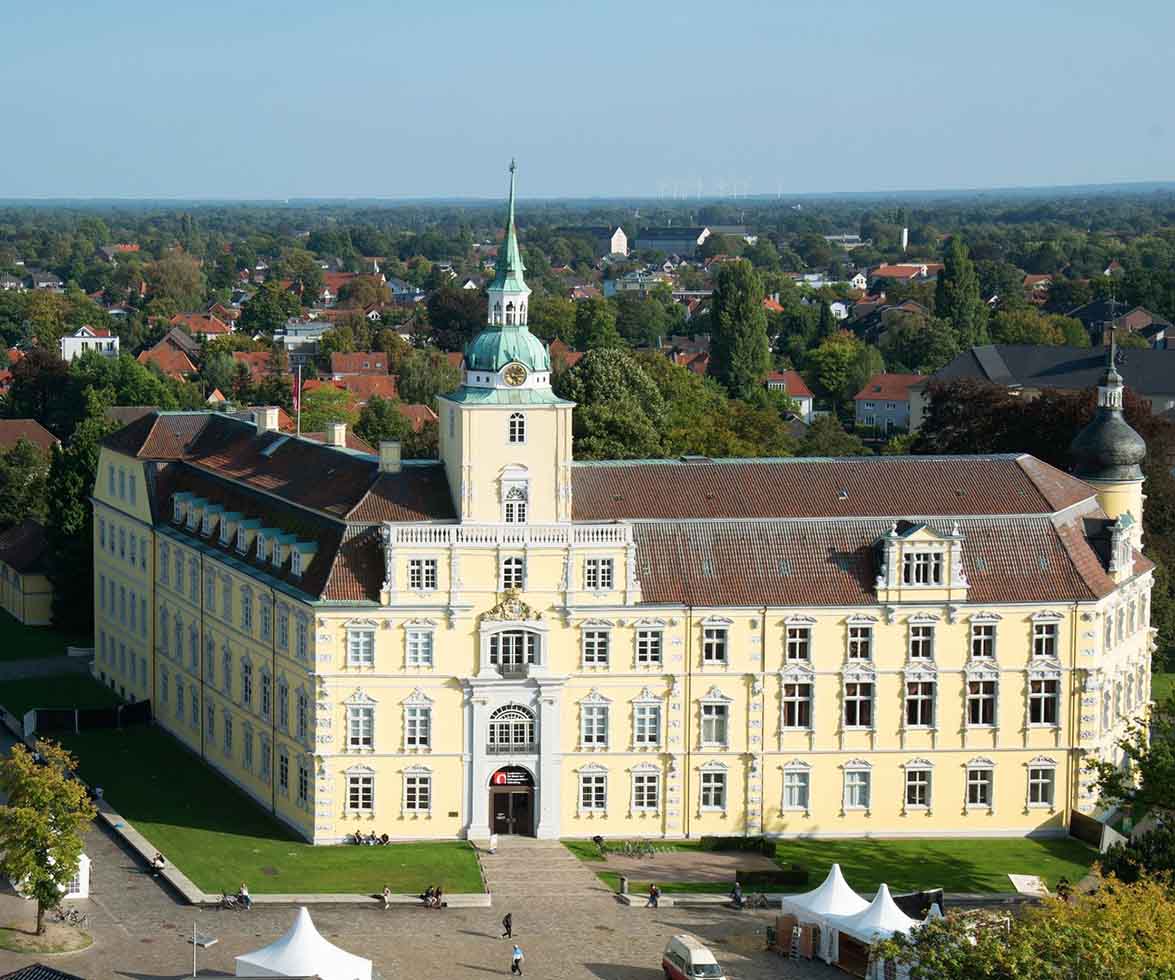
My first stop was the Schloss Oldenburg—Oldenburg Castle—hard to miss, right at the heart of the city. The building stands not in isolation but nestled into the daily life of the town, as if the past had folded itself neatly into the present. Its creamy yellow facade, neoclassical columns, and the distinctive corner tower with its green-topped dome gave it a gentle stateliness. It wasn’t grand in the sense of Versailles or Neuschwanstein, but it didn’t need to be. It had presence.
2. Schloss Oldenburg: Walking Through History
I entered through the side courtyard, where a few locals were chatting by the fountain, seemingly unfazed by the centuries of history around them. Inside, the castle unfolds more like a cultural center than a royal residence, housing part of the State Museum for Art and Cultural History. The rooms inside had been carefully preserved and curated, each telling a story—not just of the nobility who once lived there, but of the city’s broader journey through time.
One of the highlights was the Red Salon, its walls still echoing with whispers of diplomatic gatherings and formal dances. The chandelier above—crystal arms catching the sunlight—seemed to flicker with memory. The parquet floors creaked underfoot, not out of disrepair but age. I stood in the music room longer than I had planned. There was a harpsichord in the corner, ropes keeping a respectful distance between visitor and instrument, but I imagined someone in powdered wig and silk breeches coaxing melodies from it under the watchful eyes of oil portraits.
It struck me how much this castle was not about grandeur, but about continuity. It didn’t feel like a monument; it felt lived-in, even now. And in that, it captured something deeply German—a respect for structure, for tradition, for the preservation of history not as a museum piece, but as a part of daily identity.
3. The Augusteum and the Pulse of Art
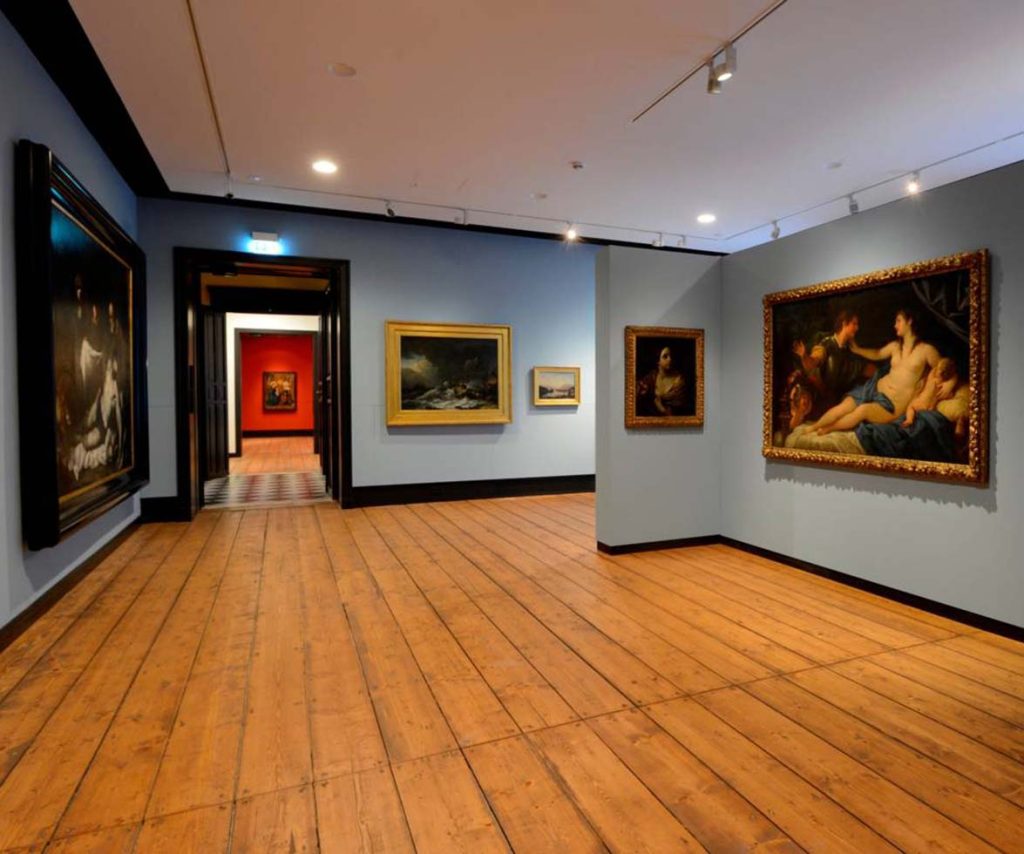
Just a short walk from the castle stands the Augusteum, another arm of the Oldenburg State Museum. Built in the mid-19th century in a striking Renaissance Revival style, it was one of Germany’s earliest purpose-built museum buildings. That alone made it worth the visit, but the real treasure was inside: the gallery’s exceptional collection of 17th to 19th-century European paintings.
The rooms were hushed. Visitors moved slowly, as if not to disturb the art. I found myself lingering before works by Rubens, van Dyck, and Gainsborough. There’s a peculiar kind of stillness in front of a Baroque canvas—a richness of detail and shadow that makes time feel irrelevant. But it wasn’t just the grand masters that caught my eye. The collection also included regional artists, lesser-known names whose brushwork and subject matter spoke directly of the north German character: modest, precise, observant.
There was one room dedicated to Romanticism, and I remember a painting of a windswept coastline that left me standing still. It wasn’t a famous piece. I couldn’t even recall the artist’s name later. But the feeling it conveyed—that sense of sublime isolation, the roaring sea under a heavy sky—was utterly absorbing. That’s what good curation does. It doesn’t just show you what to look at, but how to feel it.
4. The Horst Janssen Museum: The Mind of an Artist
Across town, in a building that contrasts sharply with Oldenburg’s historic architecture, sits the Horst Janssen Museum. Its modern glass and concrete facade seems to make a statement: that while Oldenburg reveres its past, it doesn’t live in it.
Inside, the space is minimalist and clean, almost surgical, which is fitting for the work of Horst Janssen—a master of line, of ink, of psychological depth. I had known little about Janssen before coming here. A friend who collects prints had once spoken about him with reverence, but his name rarely appears outside of Germany. That’s a shame.
Janssen’s work is difficult, even confrontational at times. His self-portraits pull no punches; his etchings dive into memory, obsession, mortality. But there’s humor too—dark, yes, but quick and clever. The museum displays not only his finished works but also his sketches, letters, and personal belongings. It’s a window into a mind that never stopped questioning, often turning the gaze mercilessly inward.
There was an etching of his mother that I couldn’t stop staring at. Every line seemed etched with emotion, not just technique. I left the museum feeling unsettled in the best possible way. Art should challenge. It should reach inside and rearrange a few things.
5. Wandering Through Eversten Holz and Cäcilienbrücke
After the intensity of the museum, I needed air. I walked west toward the Eversten Holz, Oldenburg’s oldest public park. It was once a hunting ground for the Counts of Oldenburg, and you can still feel that lingering nobility in the tall beech trees and the winding paths. Joggers passed me, a child rode by on a wobbling scooter, ducks floated on the slow canal waters, all indifferent to the centuries around them.
From there, I strolled back toward the city center via the Cäcilienbrücke, where canal boats drifted quietly and the trees reflected in the still water like watercolor. There’s a rhythm to Oldenburg that’s hard to explain until you’ve walked it: a city that doesn’t rush, that doesn’t clamor for attention, but remains quietly dignified.
6. Kulturzentrum PFL: Modern Thought in Old Walls
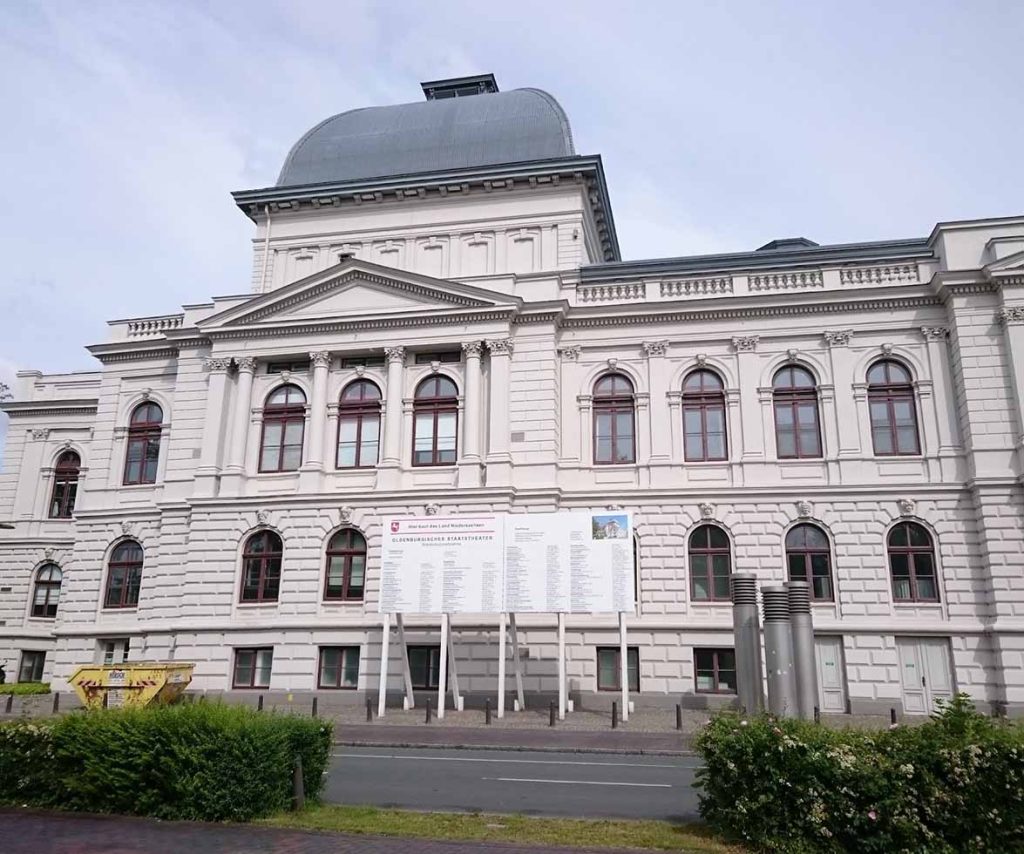
One evening, I attended a lecture at the Kulturzentrum PFL, housed in a former library building with roots going back to the Enlightenment era. Tonight, the topic was urban memory and architectural identity—a perfect fit for a city like this. The speaker, a visiting professor from Bremen, spoke in measured German, and though I caught only fragments without subtitles, the ideas were universal.
Oldenburg’s charm lies in its ability to layer time. Nothing here screams for reinvention. Instead, it listens—to history, to tradition, to the voices of those who came before. It’s a place where cultural institutions are not isolated buildings but parts of a broader civic conversation.
7. Café Culture and the Unexpected Pleasures of Silence
On my final morning, I sat at a café near the Rathaus, watching locals read their papers over steaming cups of coffee. No earbuds. No scrolling. Just presence. An older couple chatted quietly, their rhythm matching the clink of their spoons. A student nearby annotated a book with fluorescent pens, humming softly.
This was the cultural pulse of Oldenburg too—not just in its museums and institutions, but in the way life here gives space to reflection, to conversation, to quietude. I found myself ordering another espresso just to sit a little longer.
8. A City Woven with Memory
Oldenburg reveals itself slowly. There are no bucket-list monuments, no Eiffel Towers or Colosseums. What it offers is something more layered: a dialogue between past and present, held in the form of well-preserved buildings, carefully curated exhibitions, and a pace of life that allows the mind to wander and the heart to settle.
Walking back toward the station, I passed the Schloss one last time. The light was different now—morning gold playing against the stone—and the air carried the distant sound of a church bell. I paused not to take a picture, but to take it in, as fully as I could.
Some places overwhelm with their spectacle. Others, like Oldenburg, linger—quietly, insistently—until you realize they’ve taken up residence in your thoughts. And likely will for quite some time.